- Colombian pacemaker and ICD prices run about $9,100 to $21,200 in the one survey we found, overlapping what Medicare pays a US hospital for a pacemaker.
- The likely reason is the hardware: the device is a large, fixed share of the cost.
- The gap is wider for ICDs and for uninsured patients quoted high US hospital prices. Get the US price in writing first.
- Before anything else, confirm your home clinic can check the brand of device you will receive.
What these devices do
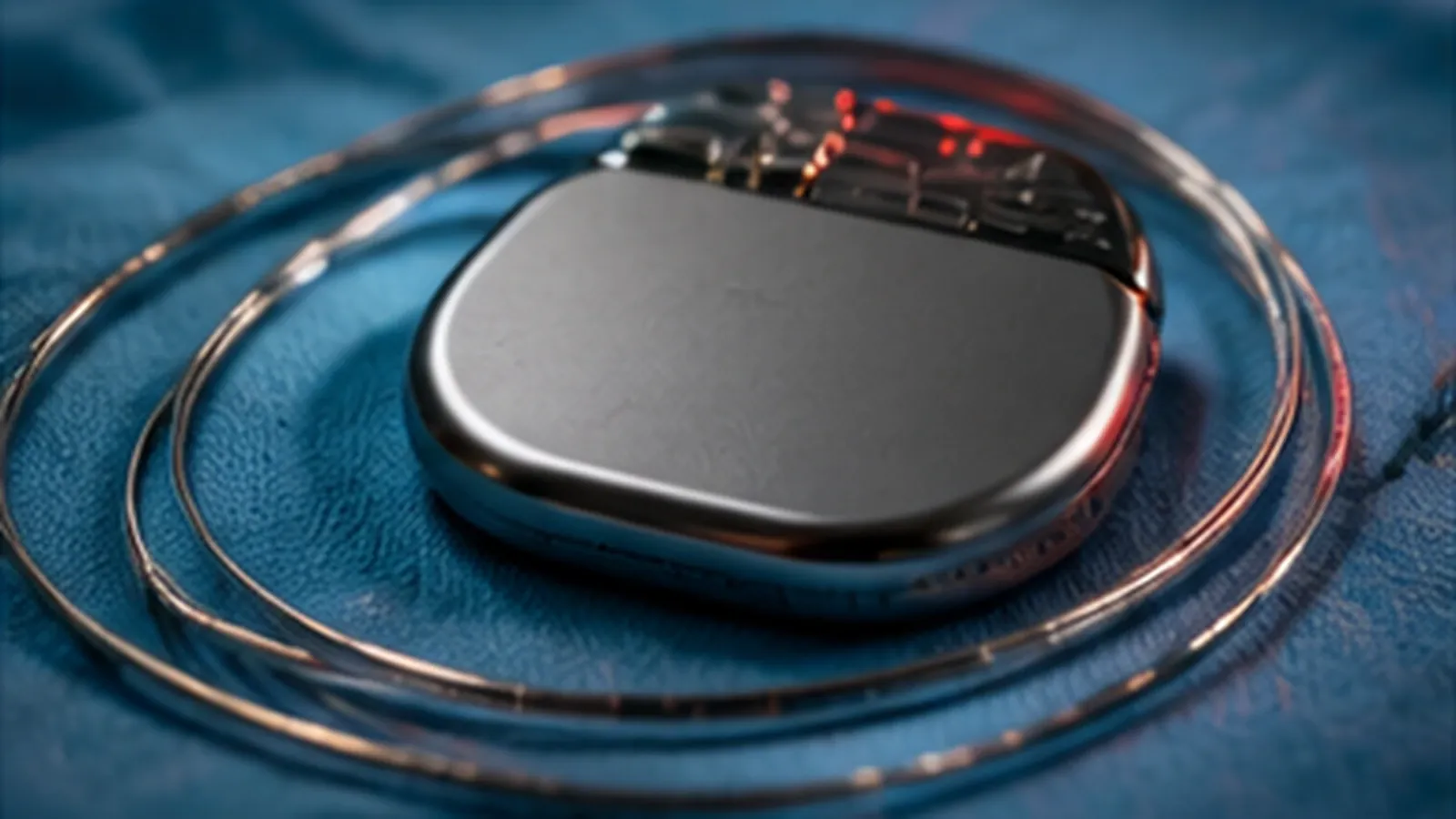
A pacemaker is a small generator placed under the skin below the collarbone, with one or more leads running to the heart. It keeps a heart that beats too slowly, or pauses, on rhythm1. An implantable cardioverter-defibrillator (ICD) looks similar but can also detect a dangerous fast rhythm and shock the heart back to normal2. Some devices do both, and some coordinate the two sides of the heart for people with heart failure.
Implantation is a relatively short procedure, usually with one night in hospital or less3,2.
The honest cost picture
Medicare rates are hospital facility payments and exclude the physician fee. The Colombian survey groups pacemakers and ICDs together, so an ICD will likely sit at the top of that range.
Sources: Abbott [1] [2] [3], Cuánto Me Cuesta, Noticias Caracol.
Pacemakers. Medicare's 2025 national hospital outpatient rate for implanting a dual-chamber pacemaker system was $10,465, and $7,690 in an ambulatory surgery center4,5. When the implant happens during a hospital admission, Medicare's payments ran from about $12,900 to $24,200 depending on complexity5. At 20 top-ranked US hospitals, median insurer prices for pacemaker implantation ranged from $506 at one to $20,002 at another6.
In Colombia, a May 2026 price survey lists pacemaker or ICD implantation together at 30 to 70 million pesos for private patients, about $9,100 to $21,2007,8. That range sits on top of the US Medicare figures. We found no directory price for Colombia to cross-check it.
ICDs. The gap is clearer. Medicare's 2025 outpatient rate for an ICD system was $32,062, and inpatient payments ran from about $33,200 to $50,4004,9. Because the Colombian survey lumps ICDs and pacemakers together, an ICD will likely sit at the top of that $9,100 to $21,200 range.
For open-heart surgery, most of the cost is people, time and hospital days, and those cost less in Colombia. For a device implant, a large share of the cost is likely the device itself, which Colombia imports. That would explain why the published ranges overlap. The same logic likely applies to TAVR valves.
When a trip still makes sense
Medicare figures are what Medicare pays, not what you will be asked to pay if you are uninsured. US hospitals can and do quote self-pay patients far above Medicare rates; for bypass surgery, a national study found the median listed self-pay price was about 2.6 times the study's Medicare median10. We did not find comparable US cash-price data for device implants, which is exactly why you need your own.
A trip can make sense if:
- you are uninsured and your US hospital's written self-pay quote is well above the Colombian range,
- you need an ICD rather than a simple pacemaker,
- you are already living in or traveling to Colombia, or
- you face a long wait at home for a scheduled, non-urgent implant.
It probably does not make sense if your insurance covers the implant with a modest out-of-pocket cost. A $2,000 difference rarely covers flights, a week of lodging and the risk of managing a new device far from your own electrophysiology team.
Recovery
- Hospital stay. Usually overnight for a pacemaker; leadless devices may be same-day3. ICD patients usually go home the day after2.
- Arm restrictions. The NHS advises not lifting the arm on the device side above shoulder height for 4 to 6 weeks while the leads settle, with a follow-up check around six weeks3. Mayo Clinic advises avoiding heavy lifting and vigorous exercise for about a month1,2. Plan to have someone else handle your luggage.
- Driving. After an ICD for someone without a prior life-threatening rhythm, Mayo Clinic says driving is usually possible after about a week if there are no shocks; after a shock, the wait is usually months2. Rules vary by state and province.
Flying home
The British Cardiovascular Society says you may fly 2 days after an uncomplicated pacemaker or ICD implant, once your rhythm is stable11. The exception is a collapsed lung (pneumothorax), a known complication of lead placement: do not fly with one, and wait until 2 weeks after it has fully resolved on X-ray11. After an ICD shock, do not fly until your condition is considered stable11.
Our planning advice is five to seven days in Colombia, which allows for a wound check and any post-procedure X-ray your team orders before you fly.
The follow-up question to ask first
A pacemaker or ICD is not a one-time procedure. It is checked regularly for the rest of its life, often remotely, and the programming equipment is specific to each manufacturer. Before you book, ask the Colombian team which manufacturer and model they plan to use, then ask your home cardiology or device clinic whether they support it. Bring home the device identification details and the implant report in English12.
An American Heart Association statement on altitude adds a simple rule that applies here too: make sure the device is working normally before you travel13. On altitude itself, the 2018 European recommendations set no firm restriction for people with devices, noting that simulated altitude of 4,000 m did not appear to affect pacing thresholds14.
Quick answers
How much does a pacemaker cost in Colombia?
A May 2026 Colombian price survey lists pacemaker or ICD implantation at 30 to 70 million pesos for private patients, about $9,100 to $21,200. We found no medical-tourism directory price for Colombia to confirm it.
Is it cheaper to get a pacemaker abroad?
Often not by much. Medicare's 2025 national outpatient rate for a dual-chamber pacemaker system was $10,465, which sits inside the Colombian range. The device itself is likely a large, fixed share of the cost. The gap is larger for ICDs and for uninsured patients facing high US hospital prices.
How soon can I fly after a pacemaker?
The British Cardiovascular Society says patients may fly 2 days after an uncomplicated pacemaker or ICD implant. If the procedure caused a collapsed lung, wait until 2 weeks after it has fully resolved. After an ICD shock, do not fly until your condition is stable.
Can my home clinic check a pacemaker implanted in Colombia?
Often, but confirm it before you go. Device checks need programming equipment from the device's manufacturer, so ask the Colombian team which brand and model they plan to use and ask your home clinic whether it supports that manufacturer.
Sources
- Mayo Clinic: Pacemaker. mayoclinic.org
- Mayo Clinic: Implantable cardioverter-defibrillators (ICDs). mayoclinic.org
- NHS: Pacemaker implantation recovery. nhs.uk
- Abbott, CMS OPPS/ASC reimbursement prospectus (CY2024 and CY2025 Medicare outpatient rates). cardiovascular.abbott
- Abbott, National Pacemaker Coding and Reimbursement Guide (FY2025). cardiovascular.abbott
- MDedge: price variation for cardiovascular tests and procedures at top US hospitals (Oseran et al., JAMA Intern Med 2022). mdedge.com
- Cuánto Me Cuesta: precios de cirugía de corazón en Colombia (May 2026). cuantomecuesta.com
- Noticias Caracol: TRM for September 28, 2026 (3,306.86 COP per USD). noticiascaracol.com
- Abbott, National ICD Coding and Reimbursement Guide (FY2025). cardiovascular.abbott
- Wei et al., Price variation in coronary artery bypass surgery at US hospitals, J Am Heart Assoc 2024. pmc.ncbi.nlm.nih.gov
- Smith et al., Fitness to fly for passengers with cardiovascular disease, British Cardiovascular Society, Heart 2010. heart.bmj.com
- CDC Yellow Book 2026: Medical Tourism. cdc.gov
- Cornwell et al., Exercise at altitude among individuals with cardiovascular disease, AHA Scientific Statement, J Am Heart Assoc 2021. pmc.ncbi.nlm.nih.gov
- Parati et al., Clinical recommendations for high altitude exposure of individuals with pre-existing cardiovascular conditions, Eur Heart J 2018. pmc.ncbi.nlm.nih.gov
This article summarizes published guidance and prices for general information. It is not medical advice and has not been reviewed by your doctors. Your cardiologist decides what procedure you need and whether you are fit to travel. Prices are ranges, not quotes. Chest pain or new symptoms: call 911 (US, Canada) or 123 (Colombia).